
A Star is Dead: Let’s Talk Supernovae
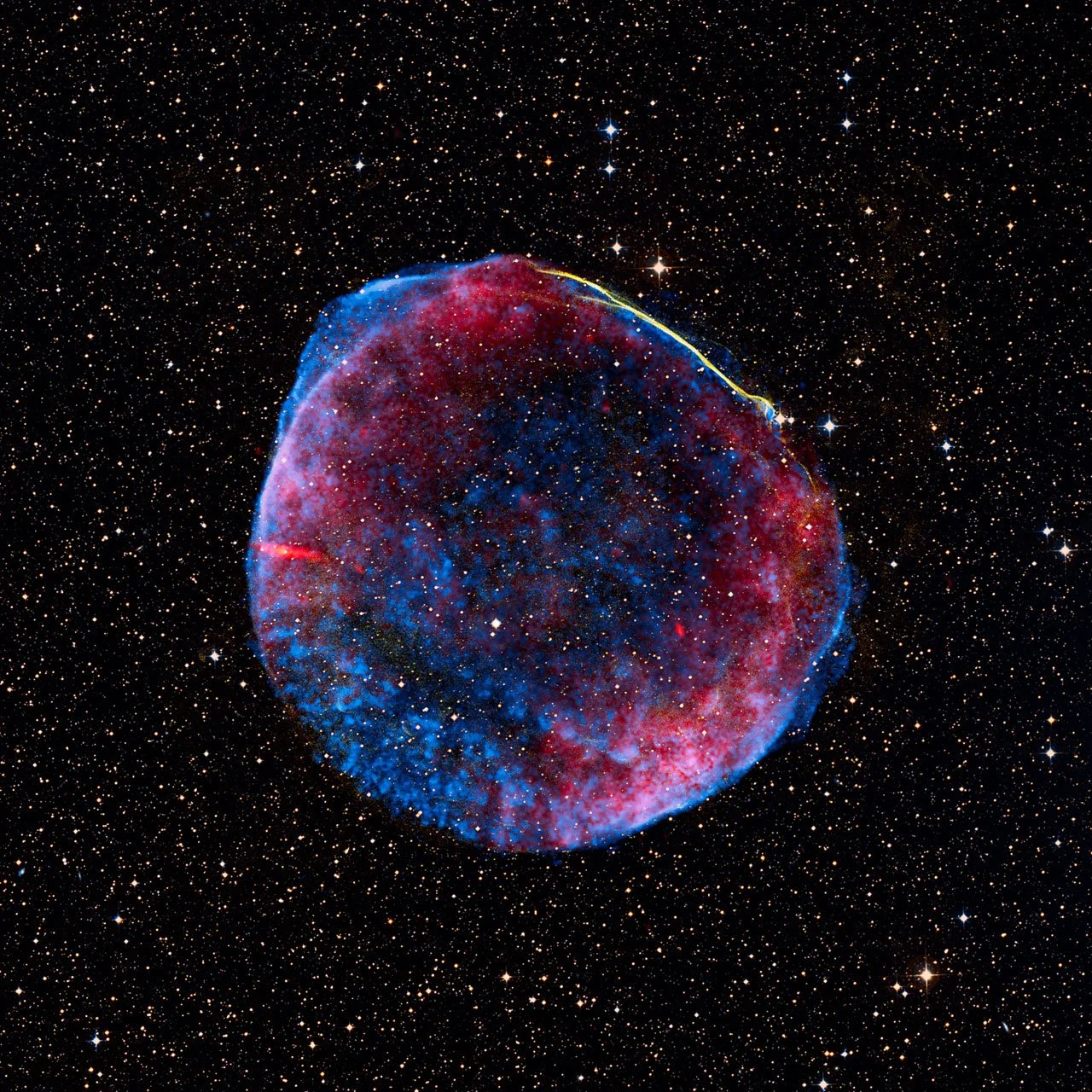
Picture this: you are an ancient Han dynasty Chinese astronomer, and the year is 185 A.D. You think you’ve seen all the stars in the night sky, and frankly, your job was getting kind of boring when, suddenly, a “new star” appears. This seldom happens, so you immediately note it down before you miss it. Observing it didn’t have to be so rushed, however, as it did remain in the sky for the next eight months before vanishing into the abyss.
Now, what was that? The answer to that question was in dispute for about 2000 years until 2006, when an article pointed its finger at a supernova explosion.
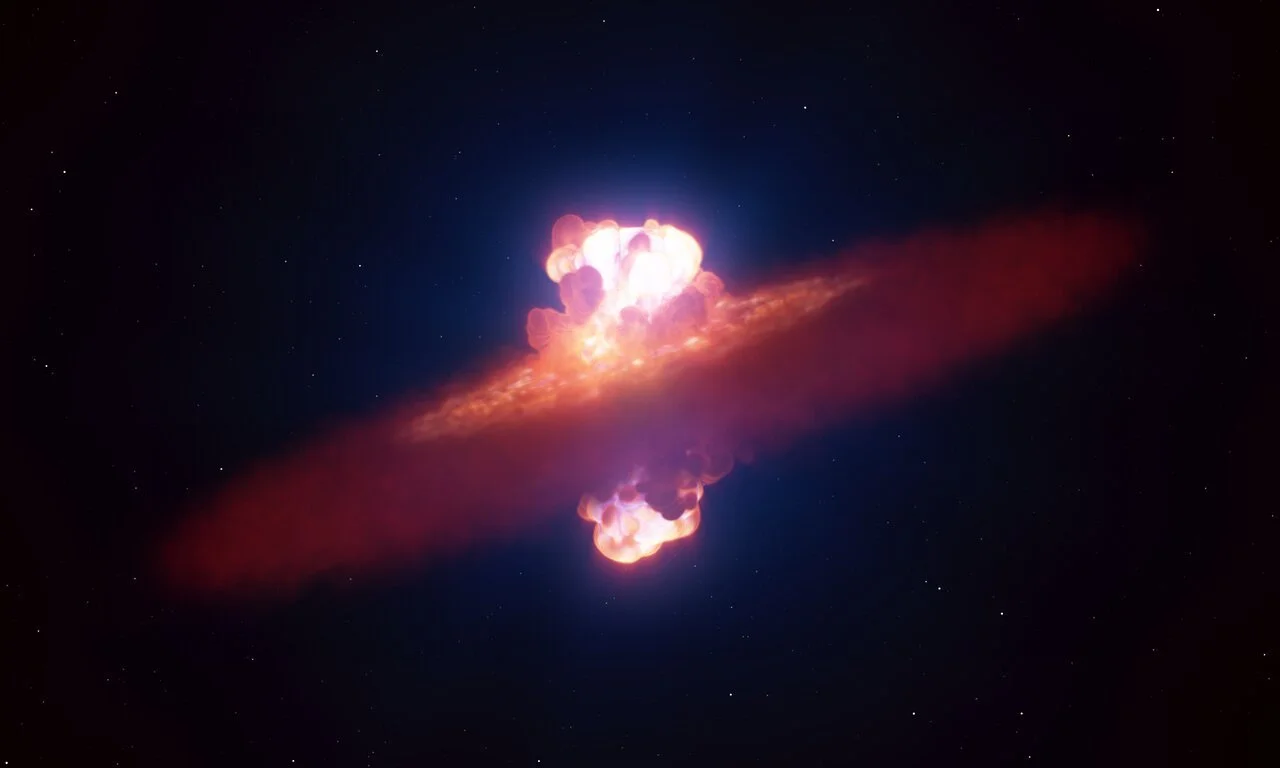
The idea of an exploding star sounds like an impossible one. What do you mean that a colossal ball of nuclear fusion floating in space can explode…even more than it already is?
Supernovae may sound like a thing of nightmares, but these cataclysmic events are the very reason you and I are alive to fear them.
What?
At the risk of sounding existential, in this context, I must mention that everything has a beginning and an end. Even stars meet their demise millions, billions, sometimes even trillions of years after their dramatic births.

The life cycle of all stars begins the same way: the clock starts ticking the moment hydrogen begins fusing in the core of a collapsing gas cloud. In layman’s terms, two hydrogen atoms walk into a packed bar, meet, fall in love, and decide to get married right then and there. They are no longer single atoms, but have now formed a union with what they had - helium! Stellar cores thrive on fusing hydrogen atoms for millions of years - it's what keeps them going throughout their adult (“Main Sequence”) years. The end of the beginning is marked when the core is entirely comprised of helium.
Then… more fusion! But not the kind that gives the star life - the kind that takes it away. At this point, a shell of hydrogen envelops the core. This trend continues and shrouds the stellar core with heavier and heavier elements like Carbon, Oxygen, and finally Iron. The core becomes unstable under gravitational force fighting thermal pressure, and begins to contract, while the star's outermost shell, mostly hydrogen-based, swells further outward.
What happens next depends on a star’s size. Using our sun as a basis, because she is the blueprint:
Stars less than ten times the mass of the sun:
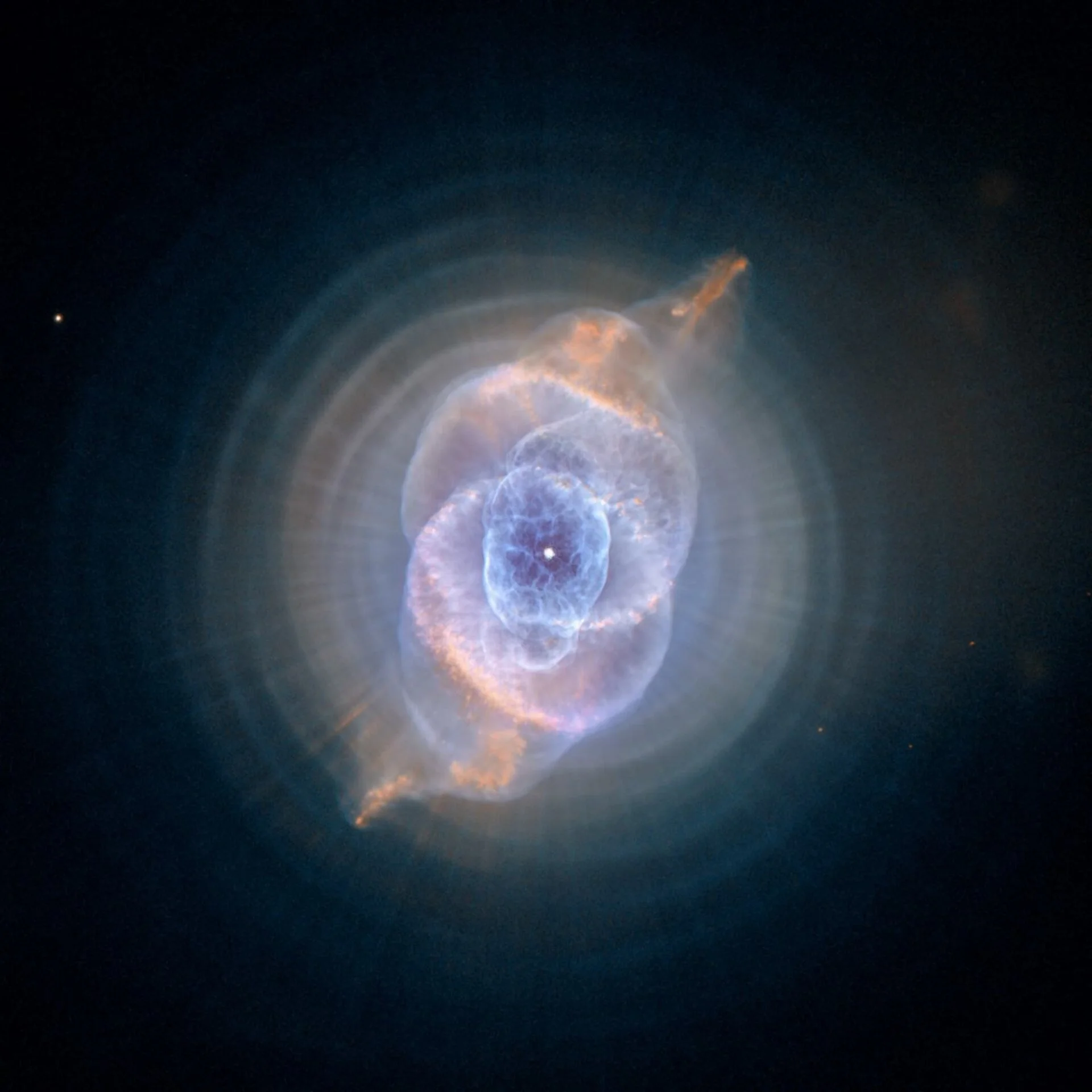
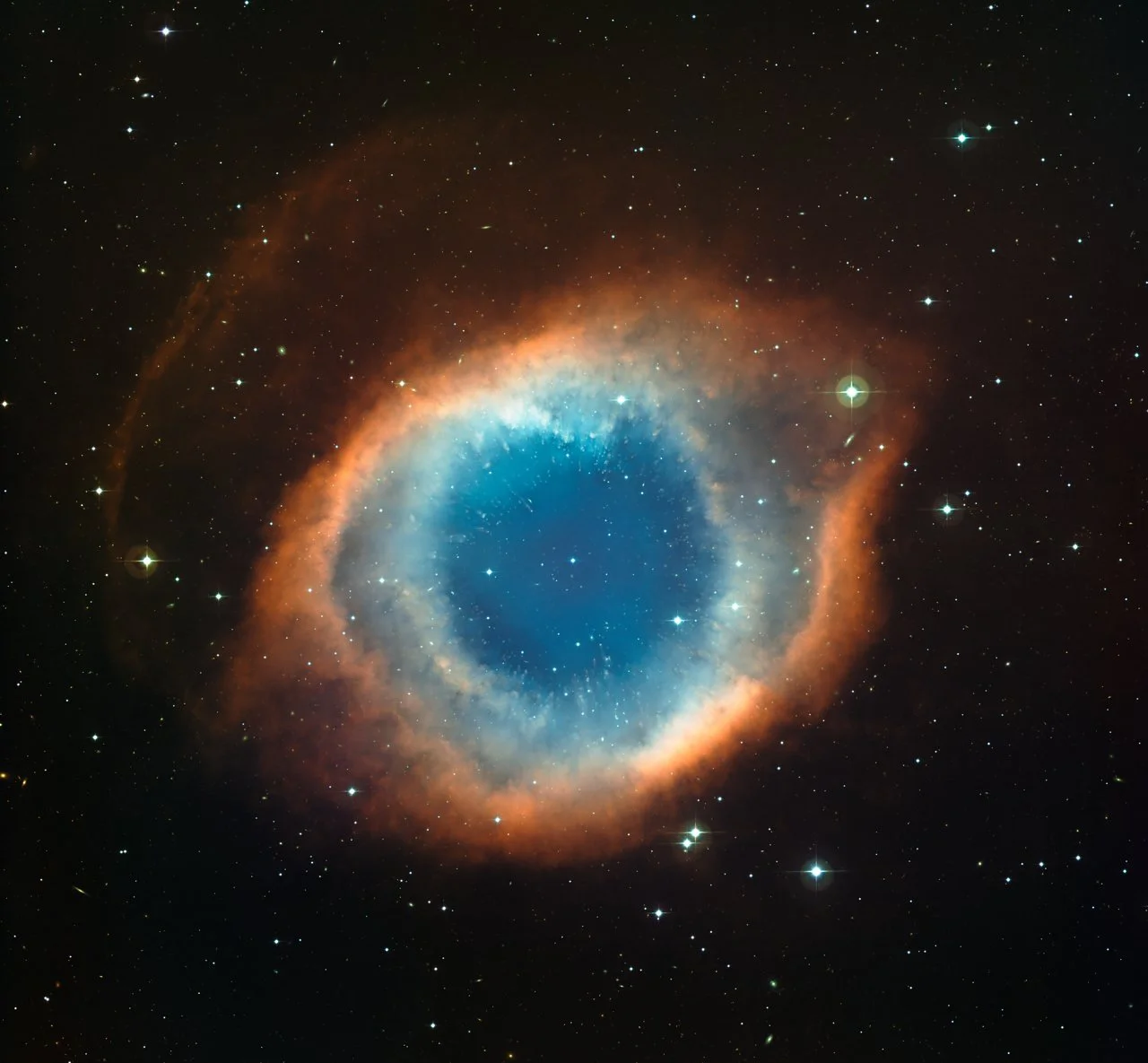
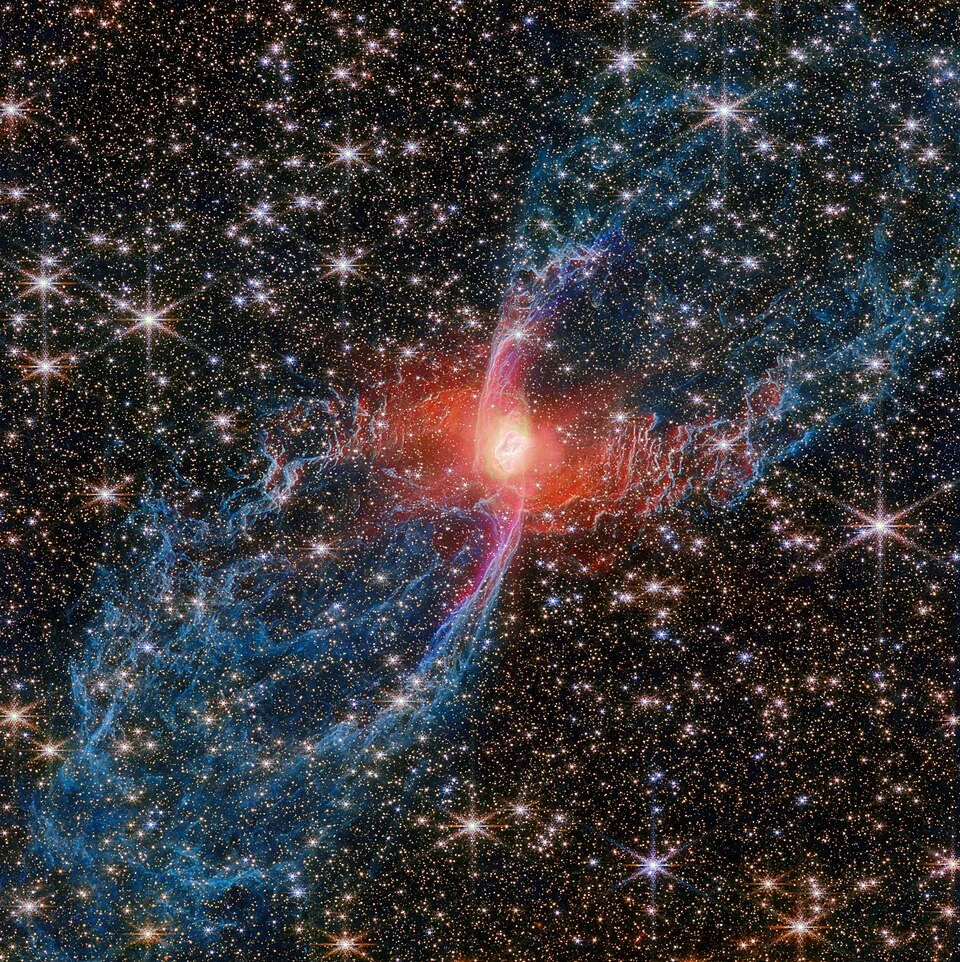
The star’s outer shells keep expanding as the core contracts and the star becomes an old, red giant. It's a simple enough name, but they really do inflate dramatically and shine a bright red color indicative of the sheer amount of hydrogen at the surface. Until iron shows up in the core, it’s a pretty smooth process. The universal laws of physics chose iron to be the cutoff element, deciding that after that point, fusion would need more energy to create heavier atoms than it was releasing. The result: energy deficit and death. The star sheds its layers out into space, and a white dwarf, a stable, hyper-dense remnant of the core, lies in a sea of gas and color left to tell the tale of a star that once was.
Big stars live (and die) for the drama
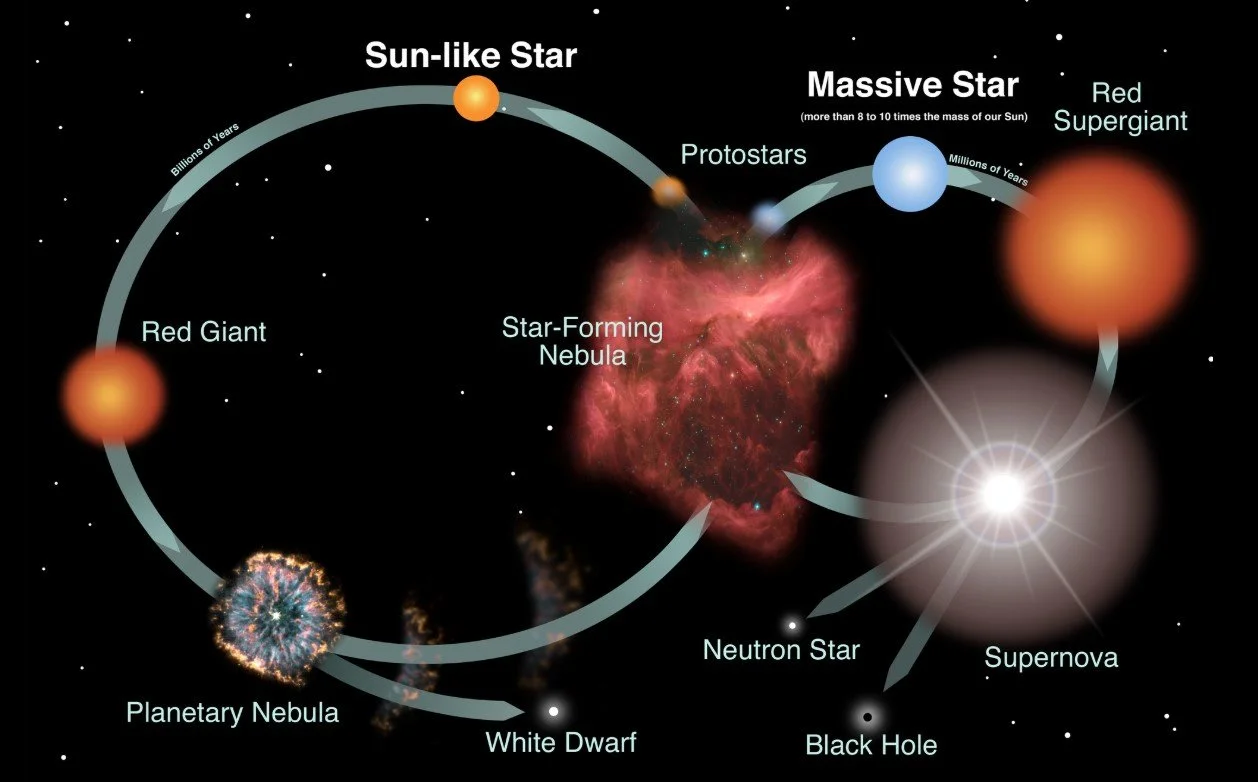
So, a dramatic explosion isn’t a sure thing with the death of stars similar to or smaller than our sun. It’s the bigger stars that usually steal the spotlight. Larger mass stars live far more spectacular but also significantly shorter lives (millions of years). They live hot, bright, and loud until the very end, where their massive cores, if at least 1.44 times the mass of our sun (The Chandrasekhar Limit), collapse to form neutron stars or even black holes. At such a high mass, a white dwarf is under such immense density that a physical principle is tested to the max: the Pauli Exclusion Principle.
In atoms, where electrons exist in energy levels all orbiting around a nucleus, there exists a certain maximum number of electrons that can occupy an energy level. The Pauli Exclusion Principle states that no two identical electrons can simultaneously occupy the same state in a system. So, as electrons fill up around larger and larger atoms in the cores of dying stars, this principle goes through extreme lengths to keep things as they should be, fighting gravitational forces in the process. But in highly massive stellar cores, electrons meet such an intense gravitational force that this principle is not strong enough to counteract it. The result: the collapse of the star’s core, leading to a supernova explosion. The bigger the star, the bigger the collapse and the bang. The largest mass stars end up as black holes.
Not all stars die the same
That was a lot of build-up just to say that stars explode when they die. The thing is, there’s plenty of nuance to what happens at the end of a star’s life, which all depends on how said life began. Even the explosions themselves can come in different forms.
Astronomers typically place observed supernovae in one of three “Minkowski-Zwicky” category “types”.
Type I
The first type is characteristically represented by a lack of Hydrogen in their spectra. This means that in the light coming from that supernova, there are no gaps where a hydrogen atom would otherwise absorb a certain wavelength of electromagnetic energy.
Ia
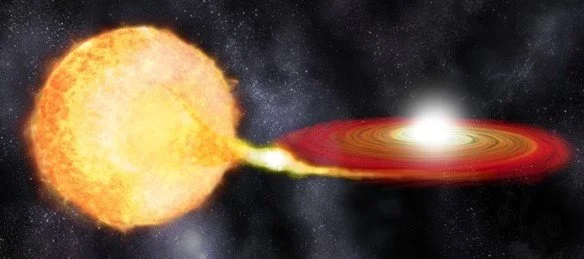
I’ll preface this by saying that most stars in the universe exist in binary systems. Two stars orbiting each other. Naturally, that raises the question of what happens if one star dies before the other. Type Ia supernovae are the result of exactly that: a white dwarf still orbits its partner star in a relationship that has become very toxic. The immense gravitational forces of the white dwarf start ripping the star apart and eating at its matter in a rather vampiric turn of events. The white dwarf eats and eats, increasing its mass to past the aforementioned Chandrasekhar limit and…bang.
-
Type Ib supernovae typically point at the demise of a particularly massive (over 25 times the mass of the sun) star’s core collapse. These stars could be in a binary system, but not necessarily, unlike with type Ia. The electromagnetic spectrum from these stars not only lack hydrogen absorption lines, but also silicon. Most of the absorption lines observable are attributed to Carbon, Oxygen, and Magnesium present - indicative of the old age of the dying star.
-
Effectively a twin to type Ib supernovae, but with a distinct lack of helium in the electromagnetic spectrum, that makes all the difference. This lack of helium indicates that the dying star shed more of its outer layers than those found in type Ib explosions.
Type II
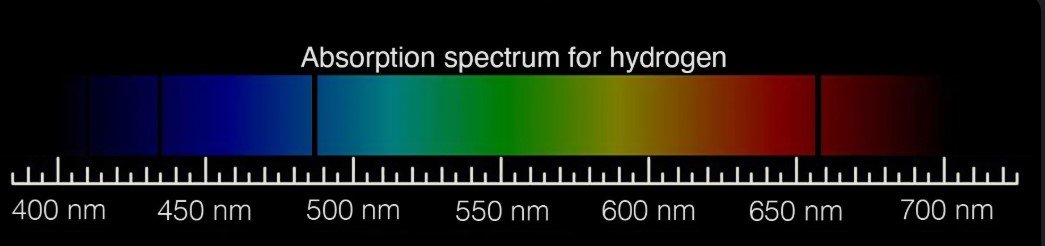
The most common type of supernova, type IIs, are caused by stars over 8 times the mass of our sun meeting their colorful end. What differentiates them from types Ib/c supernovae is that they distinctly have hydrogen absorption lines in their spectra.
Type III
At this point, we’ve established that the light coming from each of these supernovae is the only way we can understand what type they fit into. Type III is a new-ish category created to house the explosions whose spectra don’t exactly fit the mold of types I and II. One thing astronomers can identify from type III spectra is that electron capture is their root cause. Under colossal force, protons capture and merge with electrons to turn into neutrons. Though this sounds like something that should be simple enough, the decay forces from electron capture are tremendous, resulting in supernovae.
Suffice it to say, astronomers are very meticulous about their categorisation of stellar deaths. Morbid, I know. Supernovae aren’t just spectacularly bright light shows, though; they give us a way of truly understanding the stars peppering our universe. And - not to sound dramatic - but they are also the very reason we exist.
Galactic Grandparents
What DNA test companies won’t tell you is that your oldest ancestor is, in fact, a star. Our human bodies are perfect amalgamations of heavy elements like carbon, iron, magnesium, and oxygen. In our universe, the only way these elements are formed is through nuclear fusion inside dying stars. After going supernova, said stars spew heavy elements out, resulting in massive gas clouds that accrete over millions of years to form planets like Earth, where we were born!
-
Heavy elements like gold and silver are believed to have formed in something called the r-process. Essentially, astronomers theorize that this is most likely a result of - get this - neutron star collisions. Two extremely dense, unimaginably massive cores of dead stars merging and exploding in a cataclysmic event that literally sends ripples throughout the universe. Only that dramatic an explosion can create enough force and energy that forms heavy atomic nuclei.
People are way too casual about that.
Stars have never represented subtlety. They are born loud, live bright, and die both. Their remnants have just as much personality and are arguably twice as spectacular - so you can never forget where they once stood.
Conclusion
In terms of supernovae in the Milky Way, there hasn’t been one observed for over 400 years. Most of the identification and categorisation listed here were a result of extragalactic observation (millions of light-years away). The (literal) light at the end of the tunnel: a supermassive star around 640 light-years away named Betelgeuse. Betelgeuse grows redder by the day and might even go supernova within our lifetime. Excitement brews at the possibility of us having something in common with an ancient Chinese astronomer. A dream come true, if you ask me.
Thanks to Maja for the topic recommendation!